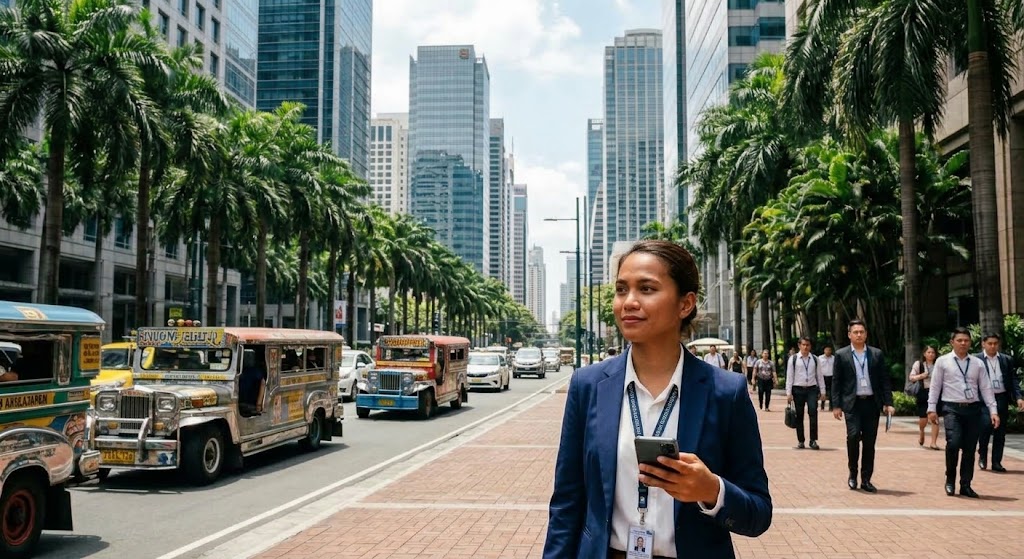
The Philippines has one of Southeast Asia's fastest-growing retail forex trading populations — driven by high English proficiency, widespread smartphone adoption, and a remittance-heavy economy that keeps everyday Filipinos closely attuned to currency movements. It's also a market with a genuinely unusual regulatory position worth understanding clearly before you trade.
This page is the starting point for Filipino traders: how the market and regulation actually work, how people fund accounts locally, and what to check before choosing a broker.
The Philippine Trading Landscape
Interest in forex and CFD trading has grown quickly in the Philippines, helped by a young, mobile-first population and an economy where currency awareness is already part of daily life — the Philippines is one of the world's largest recipients of remittances, so PHP/USD exchange rate movements are a familiar topic well beyond dedicated traders. Combined with strong mobile internet penetration and widespread e-wallet adoption (GCash and Maya in particular), the infrastructure for mobile-first trading is already firmly in place, even though the regulatory framework around it hasn't caught up to the same degree as the trading population's growth.
Regulation in the Philippines: Read This Before Anything Else
This is the most important thing to understand about trading in the Philippines, and it's genuinely more restrictive on paper than in several other emerging markets: the Securities and Exchange Commission (SEC) of the Philippines has, under Paragraph 4 of Rule II of the Amended Implementing Rules and Regulations of the Securities Regulation Code, suspended commodity futures contracts trading — a category that has been interpreted to include retail foreign exchange trading — as a domestically licensed activity. In practice, this means there are no SEC-licensed local retail forex or CFD brokers, and the SEC has issued repeated public advisories warning against unregistered platforms soliciting Filipino traders.
At the same time, independent sources consistently note that neither the SEC nor the Bangko Sentral ng Pilipinas (BSP) — which regulates foreign exchange transactions and banking, but not retail forex/CFD brokers directly — have specifically ruled against individual Filipinos opening accounts with internationally regulated offshore brokers. This creates a genuinely nuanced legal position: forex trading as an individual activity through a properly, internationally regulated broker is widely practiced and not something regulators have acted against, while locally soliciting or operating an unlicensed forex trading business is treated as illegal. Our full Philippines regulation guide covers this distinction, the SEC and BSP's specific roles, and general tax considerations in more depth.
The Smartest Path Forward: Prop Trading Firms
Given the regulatory gap described above, there's one option that deserves to be front and center for Filipino traders specifically: prop trading firms. Because they operate outside the broker-licensing question entirely — a structural fact true globally, not just in the Philippines — they sidestep the exact uncertainty that applies to every forex/CFD broker option available here. Combined with a capped, known evaluation cost instead of a full self-funded deposit (and the PHP-to-USD conversion costs that come with it), prop trading is arguably the single most capital-efficient and structurally straightforward way for a Filipino trader to access serious trading capital right now.
→ Read the complete guide: Prop Trading Firms in the Philippines — covers why this model fits the Philippines' regulatory situation so well, the eight firms worth considering, payment considerations, and exactly how to get started.
How Filipino Traders Fund Their Accounts
Filipino traders commonly use GCash and Maya (formerly PayMaya) — the two dominant e-wallets in the Philippines — alongside bank transfers routed through InstaPay (BSP's real-time interbank transfer system) or PESONet (for larger, non-real-time transfers), where a broker supports these local rails. Card payments are also common. See our dedicated guide to funding your account from the Philippines for how each of these works, including fees and timing considerations.
Trader Behavior in the Philippines
- Remittance-driven currency awareness — a large share of Filipino households regularly deal with cross-border money transfers, which translates into a population that's unusually comfortable with foreign exchange concepts even before they start trading.
- Heavy reliance on internationally regulated brokers — given the absence of a domestic licensing regime, Filipino traders consistently rely on brokers regulated by the FCA, CySEC, ASIC, or similar tier-1 authorities rather than a local license.
- High exposure to social-media-driven scams — the SEC's repeated advisories specifically target unregistered platforms marketed through social media and messaging apps, a pattern consistent with other fast-growing, under-regulated retail trading markets.
- Strong mobile-first and e-wallet-first behavior — GCash and Maya's dominance in everyday Filipino financial life carries directly over into funding preferences for trading accounts.
Where to Go Next
Prop Trading Firms in the Philippines
the recommended starting point: why this model suits the Philippines' regulatory situation, and the eight firms worth considering
Open Prop Trading Firms in the PhilippinesRegulation in the Philippines
the SEC and BSP's roles explained in full, what's actually restricted, and general tax considerations
Open Regulation in the PhilippinesHow to Fund Your Trading Account from the Philippines
GCash, Maya, InstaPay, PESONet, and international alternatives compared
Open How to Fund Your Trading Account from the PhilippinesChoosing the Right Broker
the general due-diligence checklist, if you're considering a broker despite the regulatory gap
Open Choosing the Right BrokerFrequently Asked Questions
Is forex trading legal in the Philippines?
It's a nuanced position: individual Filipinos trading through a properly, internationally regulated broker has not been specifically prohibited or acted against by regulators, but there is no domestic SEC license for retail forex/CFD brokers, and operating or soliciting for an unlicensed local forex trading business is illegal. See our [regulation guide](/philippines/regulation) for the full explanation.
Why doesn't the Philippines have local SEC-licensed forex brokers?
The SEC has suspended commodity futures contract trading (interpreted to include retail forex) as a domestically licensed activity under existing securities regulation rules, which is why Filipino traders rely on internationally regulated offshore brokers instead of a local licensing regime.
How do Filipino traders typically fund their accounts?
Commonly via GCash, Maya, and bank transfers through InstaPay or PESONet, alongside standard card payments — see our [dedicated funding guide for the Philippines](/philippines/payments) for details on each.
What's the best option for a Filipino trader given the regulatory gap in broker licensing?
Prop trading firms are worth considering first, specifically because they operate outside the broker-licensing question that affects every forex/CFD broker option in the Philippines — see our [complete guide to prop trading firms in the Philippines](/philippines/prop-firms) for the full reasoning and firm comparison.
This content is for educational purposes only and does not constitute financial, tax, or legal advice. The Philippines' regulatory treatment of forex and CFD trading involves genuine legal nuance — always verify current guidance directly with the SEC, BSP, or a qualified Philippine legal professional before making decisions.